What Happens If Hafilat Balance Runs Out During Travel


 May 10, 2026 2:41 pm
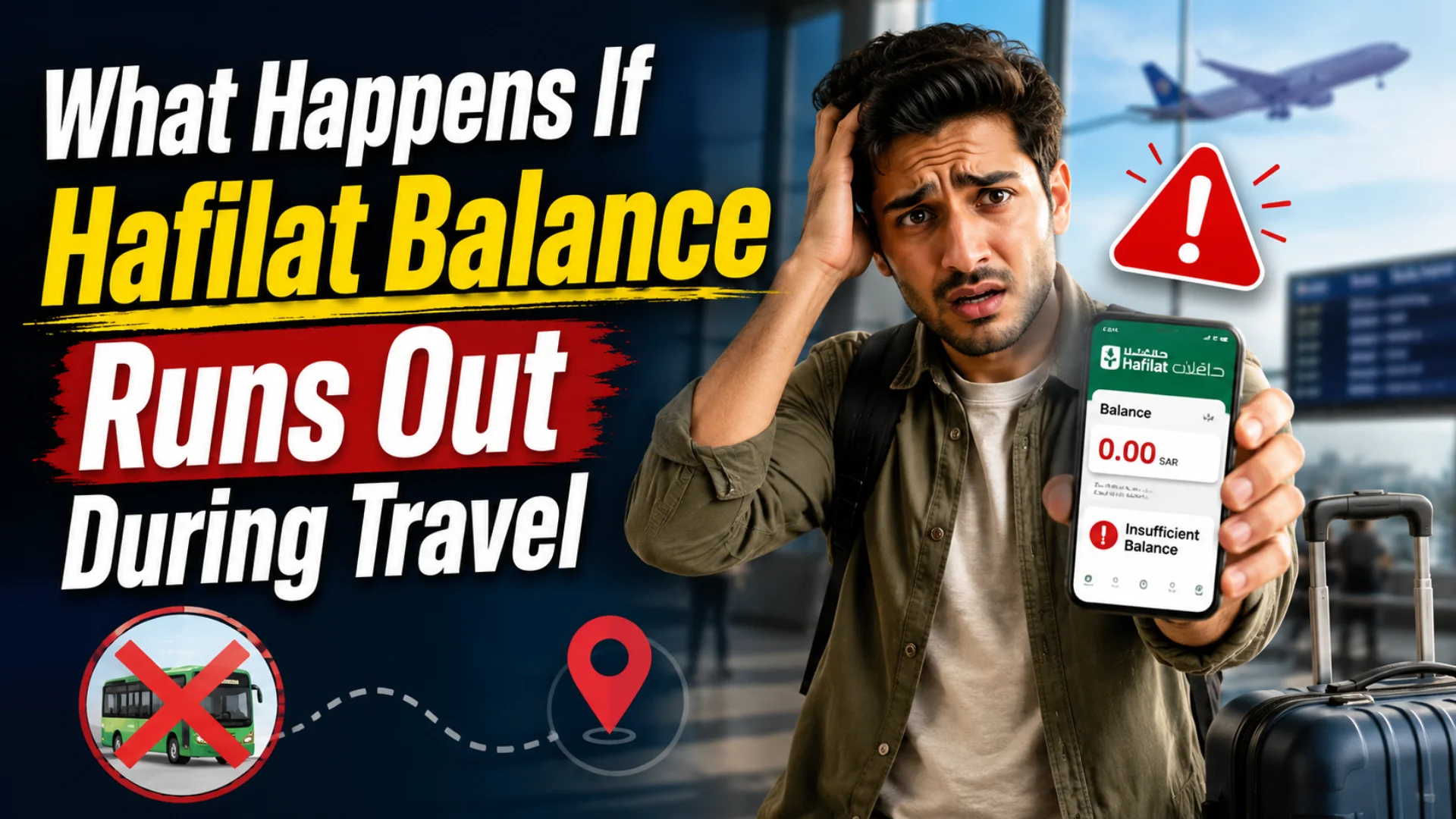
What Happens If Hafilat Balance Runs Out During Travel? If you regularly use Abu Dhabi’s public bus network, you have almost certainly experienced that sinking feeling when you tap your Hafilat card at the validator, and instead of a green light, you get a red beep. Your balance has run out. But what actually happens next? Can you still complete your journey? Will you face a fine? And how do you fix it fast?
This complete guide answers every question about what happens when your Hafilat card balance runs out during travel and exactly what you should do about it.
Understanding the Hafilat Card and the T-Purse System
Before diving into the consequences, it helps to understand how the Hafilat card works.
What Happens If Hafilat Balance Runs Out During Travel
1. You May Be Blocked at the Entry Point
If your Hafilat balance drops below AED 5, the bus validator may reject your card when you try to board. The validator is programmed to check your balance before granting access, and if it detects insufficient funds, it will simply not allow you to tap in. This means you could miss your bus entirely, which is especially frustrating during peak commuting hours.
2. Tapping Out Becomes Impossible
In a scenario where your balance depletes during travel, for instance, if you boarded with just enough balance but it ran out mid-journey, you may not be able to tap out properly at your destination. The tap-out process also requires a minimum available balance to register the journey endpoint correctly.
Failing to tap out is a serious issue in the Hafilat system. The card remains “open,” meaning the system records that you began a journey but never completed it.
3. Automatic Maximum Fare Deduction on Next Use
Here is where many commuters get an unpleasant surprise. If you fail to tap out due to low balance, the Hafilat system will automatically deduct the maximum possible fare for that route on your very next card use. This is the system’s way of recovering the fare for your incomplete journey.
For example, if you were traveling on a long intercity bus route and failed to tap out, the system assumes you traveled the full distance and charges accordingly. This automatic deduction can be significantly higher than the actual fare you should have paid, making low-balance situations costly.
4. Fines and Penalties from ITC Inspectors
Perhaps the most serious consequence of a low or zero balance is the risk of being caught without a properly functioning card by Integrated Transport Centre (ITC) inspectors. These inspectors actively patrol buses and bus stations to ensure compliance with transit regulations.
If an inspector finds that:
You may be subject to fines and penalties under Abu Dhabi’s public transport regulations. These fines are not trivial, and dealing with an inspector on a crowded bus is never a pleasant experience.
5. Inability to Complete Multi-Leg Journeys
If your commute involves multiple bus connections, a low balance can strand you mid-route. You might successfully board the first bus but be blocked from boarding the second or third leg of your journey. This is especially problematic in areas with limited alternative transport options.
What to Do If Your Hafilat Balance Runs Out During Travel
Do not panic. There are several fast, accessible ways to top up your Hafilat card and get back on the road. If your Hafilat balance becomes insufficient during travel, follow these steps.
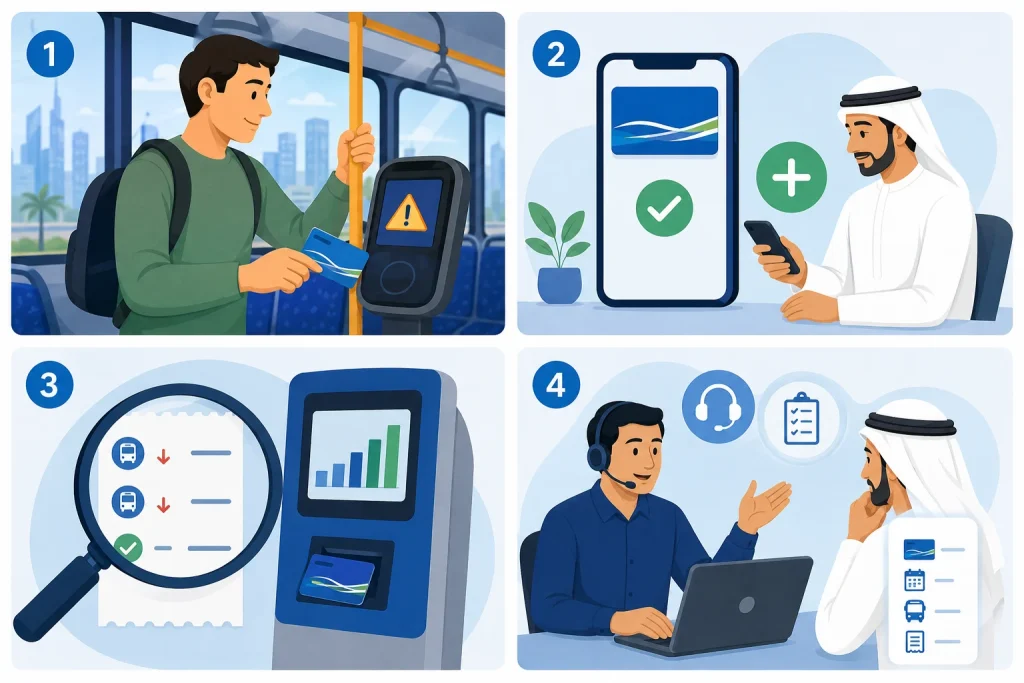
1: Stay Calm and Complete Your Trip
In most cases, the system records your journey automatically. Do not panic if the machine shows a balance warning. Complete your exit tap normally if possible.
2: Recharge Immediately
After leaving the bus, recharge the card as soon as possible from the official website:
This helps avoid:
Keeping emergency balance funds is always a smart idea.
3: Check Transaction History
Review your recent deductions to understand:
You can check this using apps, websites, or recharge machines.
4: Contact Customer Support If Necessary
If the system deducts incorrect fares or your card becomes blocked, contact Hafilat customer support.
Keep details such as the following:
This helps resolve issues faster.
Minimum Hafilat Balance Required for Travel in Abu Dhabi
The minimum balance requirement can vary depending on routes and transport authority policies.
Generally, passengers should keep at least:
Always check your Hafilat balance before traveling.
note
What to Do if Your Hafilat Card Shows a Negative Balance During Travel
If your card shows a negative balance during travel in Abu Dhabi
Common Reasons Hafilat Balance Runs Out During Travel
Tips to Avoid Running Out of Hafilat Balance During Travel
To avoid all of the consequences mentioned above, follow these simple best practices:
Benefits of Keeping Sufficient Hafilat Balance During Travel
Maintaining enough balance offers several advantages.
FAQs About If Hafilat Balance Runs Out During Travel
Can I get fined if my Hafilat balance runs out during travel?
Yes. If an ITC (Integrated Transport Centre) inspector finds that you have traveled without a valid tap-in or that your card failed to complete a tap-out due to low balance, you can be issued an official fine or penalty under Abu Dhabi’s public transport regulations.
What happens if I forget to tap out due to low Hafilat balance?
If you fail to tap out because of insufficient balance, your journey will remain “open” in the system. The next time you use your card, the system will automatically deduct the maximum possible fare for that route as a penalty for the incomplete tap-out.
Will a low Hafilat balance block me on a multi-leg journey?
Yes. If your balance drops below AED 5 during a multi-connection journey, you may be able to board the first bus but be blocked from boarding subsequent legs of your trip. This is why it is always recommended to maintain a comfortable buffer well above the minimum AED 5 requirement.
What should I do if my Hafilat card is rejected at the validator?
If your card is rejected at the validator, first check your hafilat balance via the Darb app. If the balance is below AED 5, recharge immediately through the app, TVM, or Lulu Hypermarket before attempting to board again. If your card is rejected despite having sufficient balance, contact Hafilat customer support for assistance.
Conclusion
Running out of Hafilat balance during travel can quickly turn a smooth commute into delays, penalties, and unnecessary stress. By monitoring your balance, tapping in and out correctly, and recharging before trips, you can avoid maximum fare deductions and travel disruptions. Staying prepared ensures uninterrupted, hassle-free journeys across Abu Dhabi’s public transport network every day.
Source
Hafilat https://hafilat.darb.ae/
Customer Happiness Center
Noura al Noman
I’m Noura Al Noman, an author at hafilatbalancechecksae.com. I write clear and informative guides about Hafilat balance checks, card services, and public transport in the UAE. My goal is to provide accurate, user-friendly information that helps readers complete tasks quickly and easily.